Building my Koli Calling attendance streak, I got to go return to Joensuu and Koli once more.
Doctoral consortium
After the lovely experience being a discussant/mentor last year, I asked Miranda if she could use my help again this year and she did! So, I arrived in Joensuu on Monday night for a bright and early start on Tuesday morning.
The Koli DC is a two-day affair focusing on preparing the participants for a strong presentation of their work, with some broader field and methodology discussions in between. The discussants were very well prepared and highly engaged throughout the two days, which made the DC another great place to be.
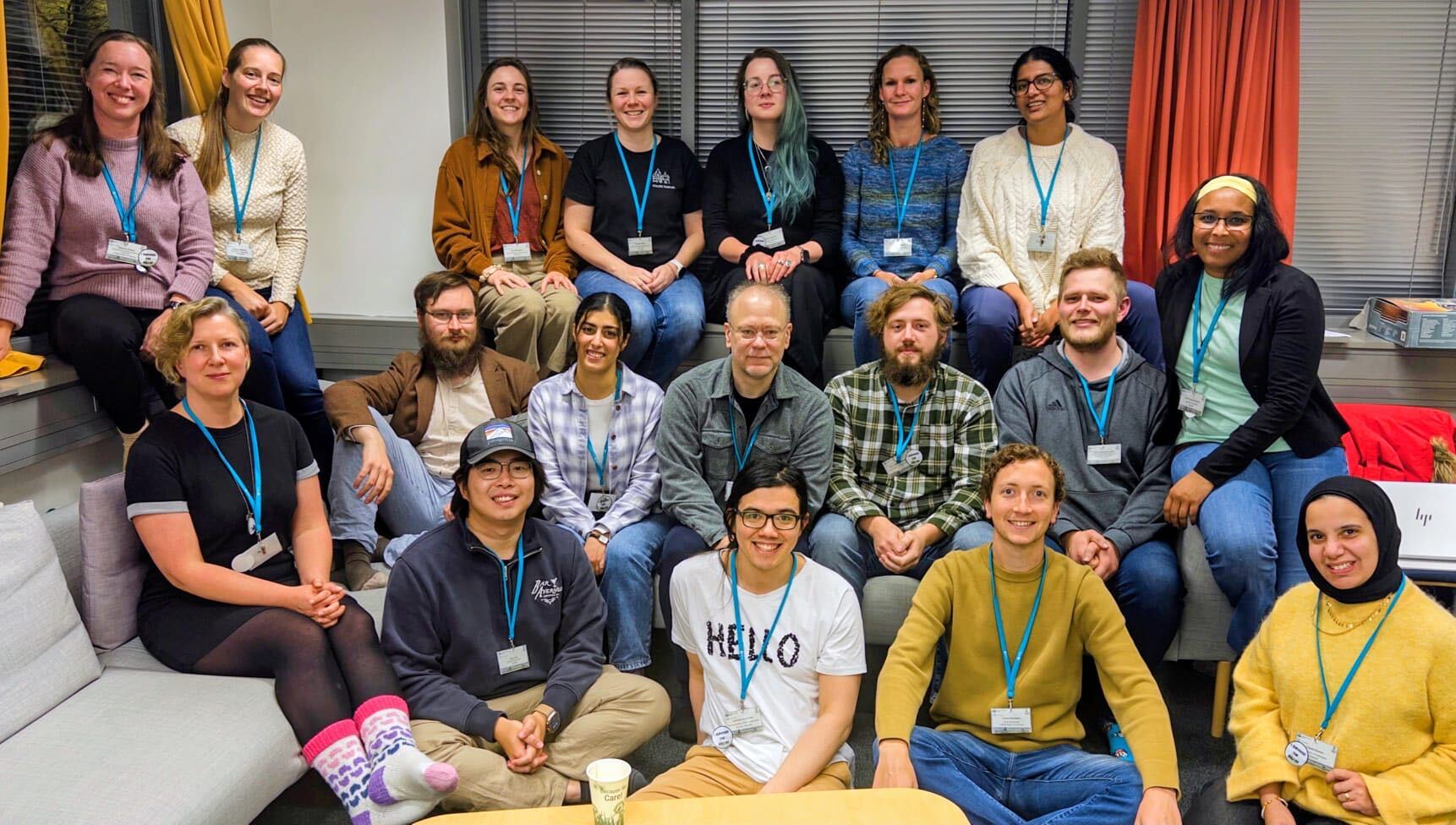 The members and discussants in the UEF lab.
Many thanks to everyone at University of Eastern Finland for facilitating the DC!
Day one
Opening. The conference was opened by chair Rodrigo Duran, who gave us some insights into the numbers behind this year's Koli. Some noteworthy numbers this year include the number of attendees from the US (16!), the acceptance rate for research papers (28%), and the acceptance rate for posters (24%). With 99 attendees, this was the largest Koli ever.
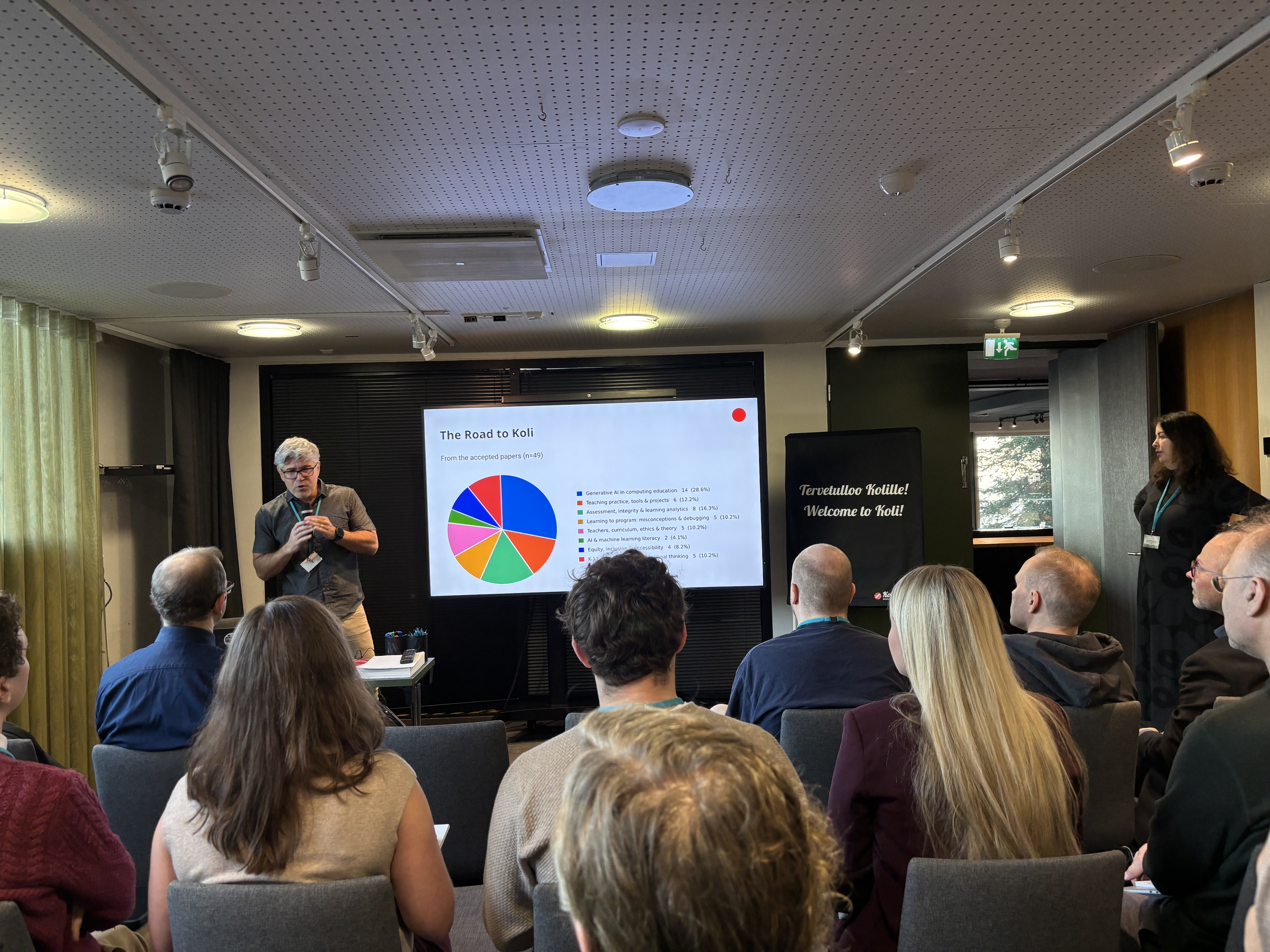 The categorization of accepted papers for 2026.
GenAI-Powered Computer Science Education Tools: A Systematic Literature Review
Owen Sizemore, paper.In line with one of the materials the participants of the DC read, we know that tool building is a popular activity in CS Education. Owen and his co-authors investigated this in a systematic literature review. Their focus was on tools with guardrails, a pedagogically responsible choice. To me, the most interesting aspect of this work is that they investigated the educational framing of the tools. They found that the majority of tools focus on scaffolding the learning process, with cognitive load theory and metacognition as close seconds. Another 10 framings followed, some quite surprising, like the Socratic method and Bloom's taxonomy. The authors urge tool builders to be incremental or replicate, as those are good scientific practices. I'm planning to follow this advice with new work on SQLVis, so stay tuned!
Reconsidering the Urgency and Necessity of Generative AI Integration in Computing Education
Hieke Keuning, paper.I loved that this very critical paper (and this related one) was presented right at the start of the conference when everyone was still in the room, as I believe it is something we should all hear. Many papers in our research field (and in many other fields too) describe AI as a revolution, a solution, something inevitable. Many lecturers also think it is something we must integrate in our teaching. However, maybe it is not as inevitable as we think.
There were two specific points why we should reflect on our choices. First of all, we should not confuse production tools with learning tools. Yes, our students will likely use all the latest tools in their careers, but that does not mean that these tools are also the best ones to learn CS practices. We also know there are harms: eroding social interactions, the widening learning gap, and even that many students do not really want to use it. Educational claims are (so far) unsupported.
Point two is that we cannot separate the products from the technology. GenAI is not a neutral tool, but is based in labour exploitation, stolen data, and is detrimental to the environment. It is also very strongly political and has large impact on society. Of course there is some value in GenAI, but the majority of the current valuation is purely hype.
So what are some ways forward? We should realize that AI is unavoidable in terms of exposure to it, but it is not inevitable: we do not need to integrate it in all courses. Make sure to put people and pedagogy before AI integration. Make sure your values are reflected in the products you use and/or teach. Finally, the message of both of these papers is that it matters how we talk about AI. The words we use to describe it, is how people that we influence (students, but also media) will talk about it too.
Towards Comparative Comprehension in CS1: An Exploratory Study using Structured Code Comparisons
Azeeza Eagal, paper.Writing code comes with a challenge: there are many different ways to implement the same thing. As such, being able to compare snippets of code and evaluate them for correctness and task alignment is a valuable skill. Azeeza and her co-authors set up an experiment in which they ask students to compare code snippets and explain potential differences in behaviour. They offered students comparison of two snippets per exercise, that should guide their attention to a certain aspect of the language. They then performed a debugging task, and this cycle repeated three times. Comparison to a control-group showed no significant effects of this method, but the study was very small. The qualitative results show that most students read code in a very superficial manner, where they might identify the difference but still choose the incorrect answer. One explanation for this could be that this was students first exposure to Python, such that they do not have sufficient experience to investigate the code in depth.
Keynote: The Invisible Learner - Arto Hellas
The keynote was based on the story of 'The invisible child' from Moomin, where Ninny is a girl who was so neglected that she turned invisible. As a result she started wearing a bell so people could know where she was. Arto turned this into a reflection on newcomers, both in the classroom as well as in the research community.
For example, universities often require researchers to have an accepted paper to be able to go to a conference. This means that a paper rejection (which becomes increasingly likely with the massive influx of papers) leads to a loss of human interaction.
He left us with the message that a conversation in a corridor or coffee queue (or even the sauna) can be very impactful. He urged the first timers to start many discussions, and the more senior people to ask questions. You never know which new perspectives a fresh connection might offer you.
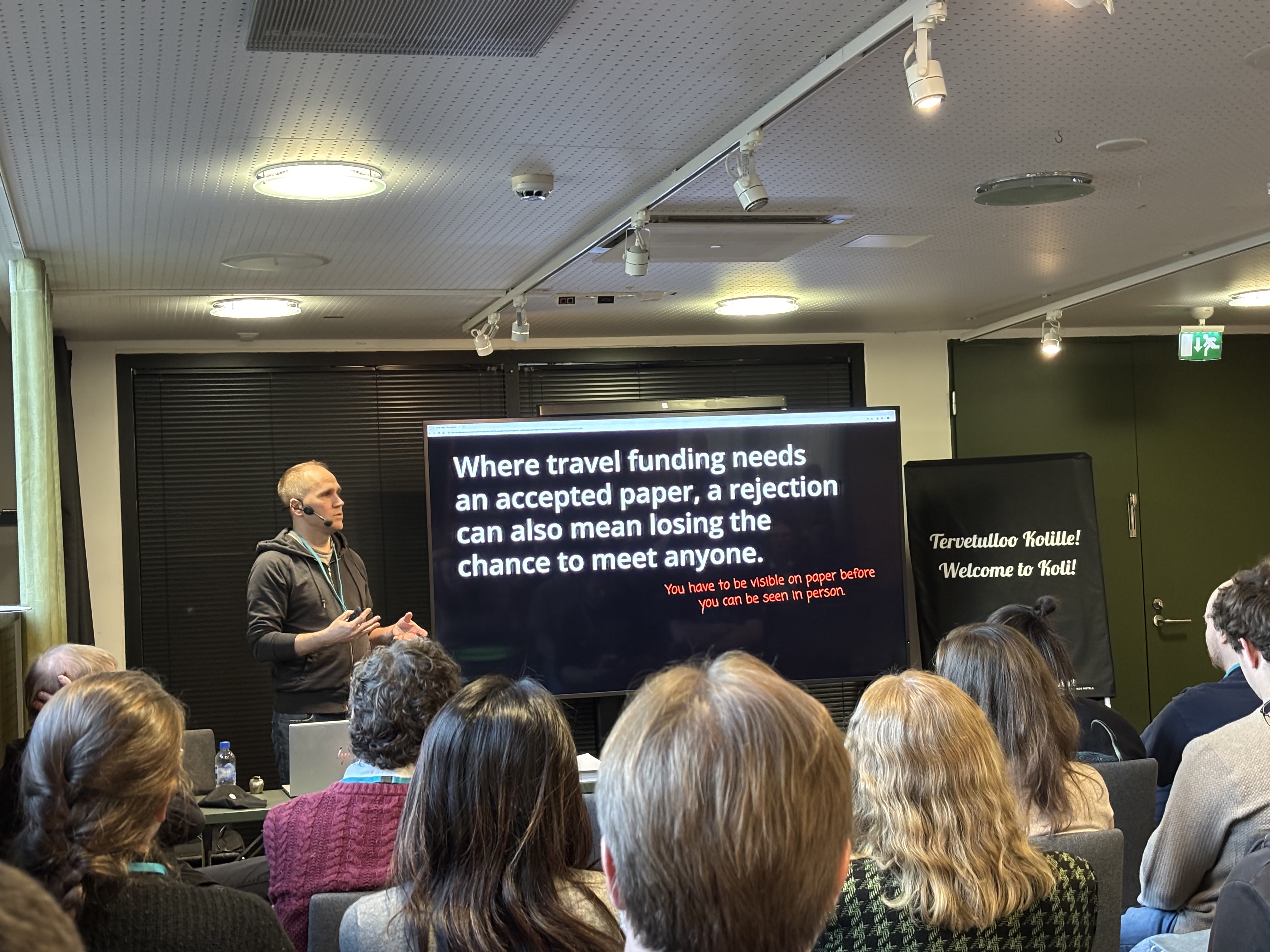 Arto presenting his keynote.
DC posters
The day ended with the lightning talks and posters that our doctoral consortium participants had practiced so much on on the two previous days. It was great to see their increased confidence, and the engagement of the audience with their work.
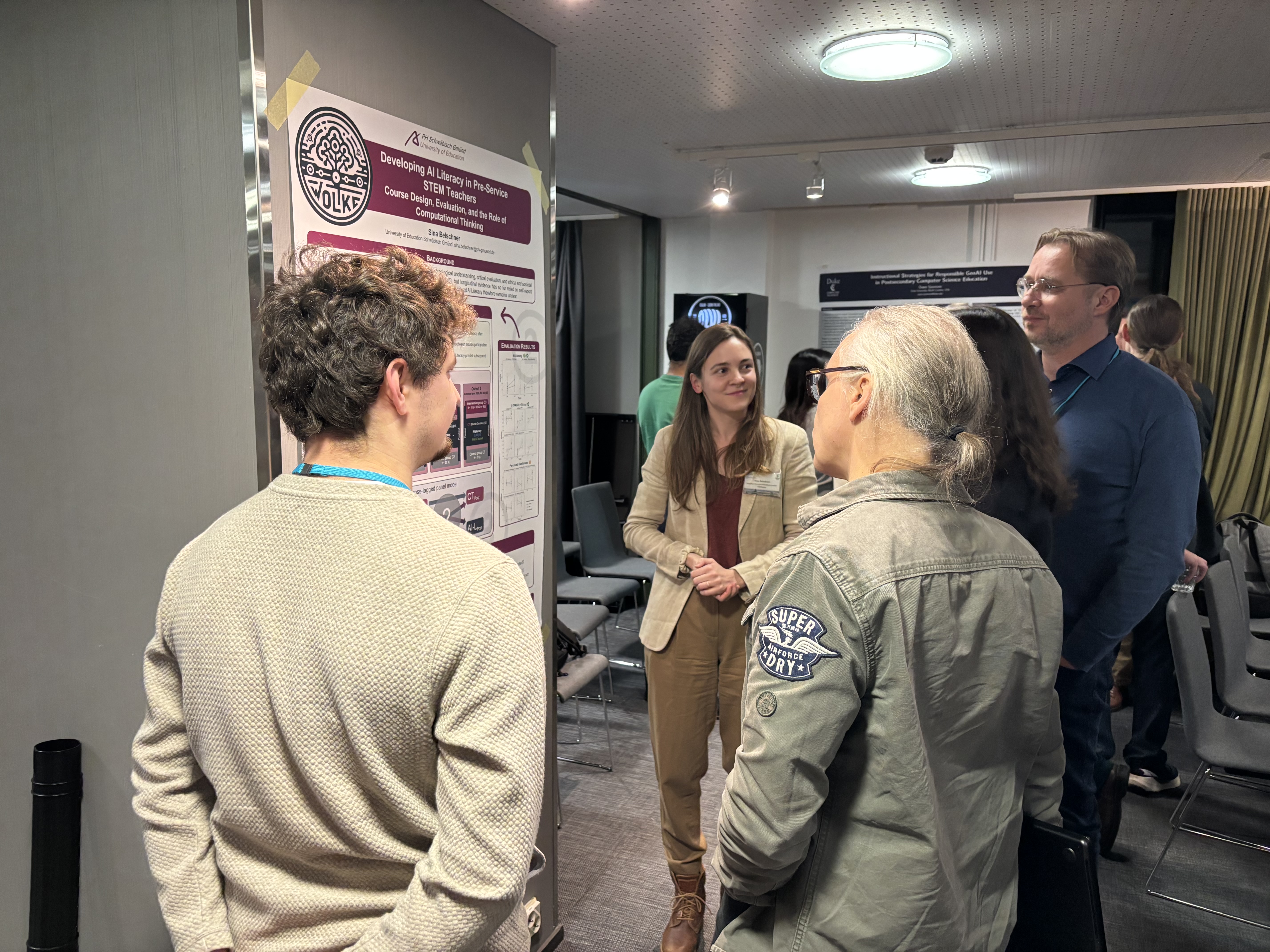 Sina presenting her course design to attendees.
We were winding down the day with some magic tricks and a game of Spoons (not very relaxing, actually), when the reports of Northern Lights came in. Surprisingly enough, it was already very visible from the hotel balcony. After securing some initial pictures in case it would fade, we went up to Ukko-Koli for an even better view. The clear skies allowed for great pictures as well as a view of thousands of stars. The voices full of wonder of the other attendees made it even better. A perfect closure to this first Koli day.
 Northern Lights at Koli.